Most manufacturing errors don’t start with bad intent or poor workmanship. They start with missing, outdated, or misunderstood instructions.
For small and midsize manufacturers, especially those producing engineered parts, aerospace components, medical devices, wire harnesses, or composite materials, consistency matters. A single missed step can lead to scrap, rework, or worse: customer complaints and compliance issues. Yet many shops still rely on paper travelers, legacy/institutional knowledge, or shared folders to communicate how work should be done.
Digital work instructions change that dynamic. They don’t just replace paper. They create a reliable, repeatable way to perform work correctly—every time.
the hidden cost of paper and legacy knowledge
Paper-based instructions and informal training methods often feel “good enough” because they’ve been used for years. But they introduce risks that grow as teams change and workloads increase.
Common challenges include:
Outdated instructions circulating on the shop floor
Handwritten notes that vary by operator or shift
Critical steps passed down verbally, not documented
Long training cycles dependent on a few experienced employees
In smaller teams, legacy knowledge tends to live in people’s heads. When those individuals are unavailable, move on, or retire, that knowledge goes with them. The result is inconsistent execution and longer ramp-up times for new hires.
Digital work instructions help capture and standardize that knowledge so it’s available to everyone, when and where it’s needed.
what digital work instructions really are
Digital work instructions are structured, version-controlled process steps delivered electronically at the point of work. They go beyond PDFs stored on a shared drive.
Effective digital instructions:
Present steps in the correct sequence
Include visuals, notes, and specifications tied to the job
Enforce required checks and validations
Update automatically when a process changes
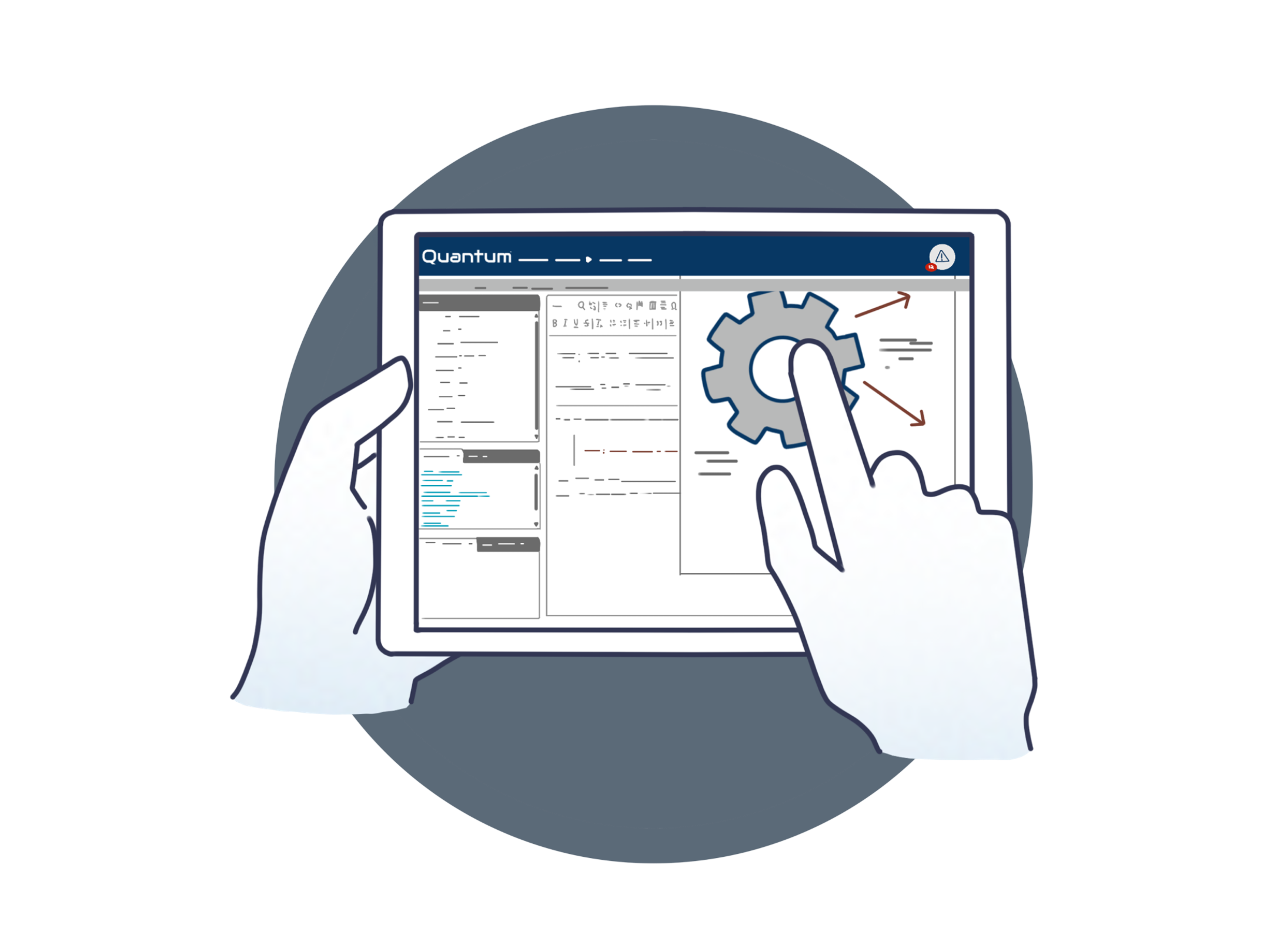
Most importantly, they’re integrated into production, not treated as a separate reference. With Quantum MES, digital work instructions are directly connected to jobs, routings, and quality requirements. Operators don’t need to hunt for information. It’s already part of their workflow.
reducing errors through standardization
When instructions vary, results vary.
Standardized digital instructions ensure that every operator:
Follows the same approved process
Uses the correct revision of a procedure
Completes required steps before moving forward
This is especially critical in regulated and high-precision industries. Aerospace and medical device manufacturers can’t afford undocumented deviations. Wire harness and composite manufacturers face similar challenges with complex assemblies and material handling requirements.
Digital instructions reduce errors by making the right way the easy way. If a step is required, the system enforces it. If a check is missed, it’s flagged immediately, not discovered days later during inspection.
faster, more consistent training
Training is one of the biggest bottlenecks for growing manufacturers. New hires often depend on shadowing experienced operators, which pulls productivity away from both.
Digital work instructions accelerate onboarding by:
Providing clear, repeatable guidance from day one
Reducing reliance on one-on-one coaching
Allowing new operators to work independently sooner
Instead of memorizing steps or asking for clarification mid-job, operators can follow structured instructions designed for the task at hand. Training becomes more consistent, measurable, and scalable.
For shops struggling to hire or retain skilled labor, this consistency is a competitive advantage.
protecting against legacy knowledge risk
Every shop has “that person.” The operator who knows all the exceptions, shortcuts, and workarounds that keep production moving.
While that experience is valuable, relying on it exclusively creates risk. Digital work instructions help transfer that knowledge into a shared system without diminishing the operator’s role.
By documenting best practices and process nuances:
Knowledge stays in the business, not just with individuals
Process improvements can be reviewed and approved
Continuous improvement becomes intentional, not accidental
Quantum supports version history and traceability, so changes to instructions are controlled, auditable, and reversible when needed.
real-time updates without disruption
One of the biggest limitations of paper instructions is how hard they are to update. Even small changes require reprinting, redistribution, and trust that everyone received the new version.
With digital work instructions:
Updates are published once and applied everywhere
Operators always see the current version
Previous versions remain accessible for audits and investigations
This is particularly valuable when responding to customer feedback, design changes, or quality issues. Adjustments can be made quickly without losing control.
why digital instructions work better with an MES
Standalone instruction systems solve part of the problem. Integrated MES solutions solve the whole thing.
When work instructions live inside Quantum MES, they’re connected to:
Scheduling and routing
Labor and production tracking
Quality checks and documentation
Lot, serial, and material traceability
This connection ensures instructions aren’t followed in isolation. They’re part of a controlled, visible process that supports production goals, compliance, and cost control.
a practical step toward a paperless, automatic shop
Going digital doesn’t require a full overhaul. Many shops start by converting their most error-prone or training-intensive processes first.
Digital work instructions are often the foundation of a paperless manufacturing strategy because they:
Improve quality immediately
Reduce training time
Increase confidence on the shop floor
They also set the stage for better data, better decisions, and better outcomes.
Takeaway: Digital work instructions reduce errors, speed training, and protect critical knowledge. For small and midsize manufacturers, they provide structure without slowing down skilled work.
If you’re ready to move beyond paper and legacy knowledge, or want to see how Quantum supports digital work instructions in real production environments, reach out and ask us how we can help
Is Your Shop Ready for an MES?
Download our free checklist to guide the conversation on an MES within your own team. Breakdown every area of your shop to see where production control, scheduling, quality control and more has the opportunity to help you grow.
Automation has been part of manufacturing for decades. Robots load parts. Machines run unattended. Software schedules work and tracks output. Yet for...

.png?width=200&height=200&name=Untitled_Artwork%20(17).png)


 Kristin McLane
.png?width=300&height=100&name=Untitled_Artwork%20(3).png)

 Kristin McLane : January 28, 2026 at 10:00 AM