3 min read

data-driven decisions: four step process for small manufacturers

data-driven decisions: four step process for small manufacturers

The manufacturing environment is changing rapidly. Technology innovations, global pressures, shifting politics, and the accelerating pace of change make it harder than ever to keep up. Many manufacturers are still making business decisions based on partial or outdated data gleaned from scattered sources with no consistent context.  

This can lead to mistakes, inefficiency, missed opportunities for improvement and growth. It can also slow decision-making, turning what should be proactive improvements into resource-based, reactive processes that can result in little improvement. 

For small and midsize manufacturers in a changing environment, a better way forward is a step-by-step, data-driven process that enables faster, more confident decision-making with relevant data. A process that can create an evolutionary improvement approach for a small or mid-size company to avoid mistakes and exercise positive control of future production issues.

 the challenge of today’s environment

For most companies, production information is scattered across spreadsheets, Word docs, emails, engineering plans, and handwritten notes, amongst others. That creates:

  • Overlapping data or conflicting data
  • Missing data or incomplete records
  • Old data with no updates from today or yesterday
  • Gaps in visibility that prevent further improvement 

By identifying all production information in one place, manufacturers can transform this problem into a positive effort and opportunity for improvement. This is a learning experience for the prospect and the CIMx team as we uncover what data is available and what is not.

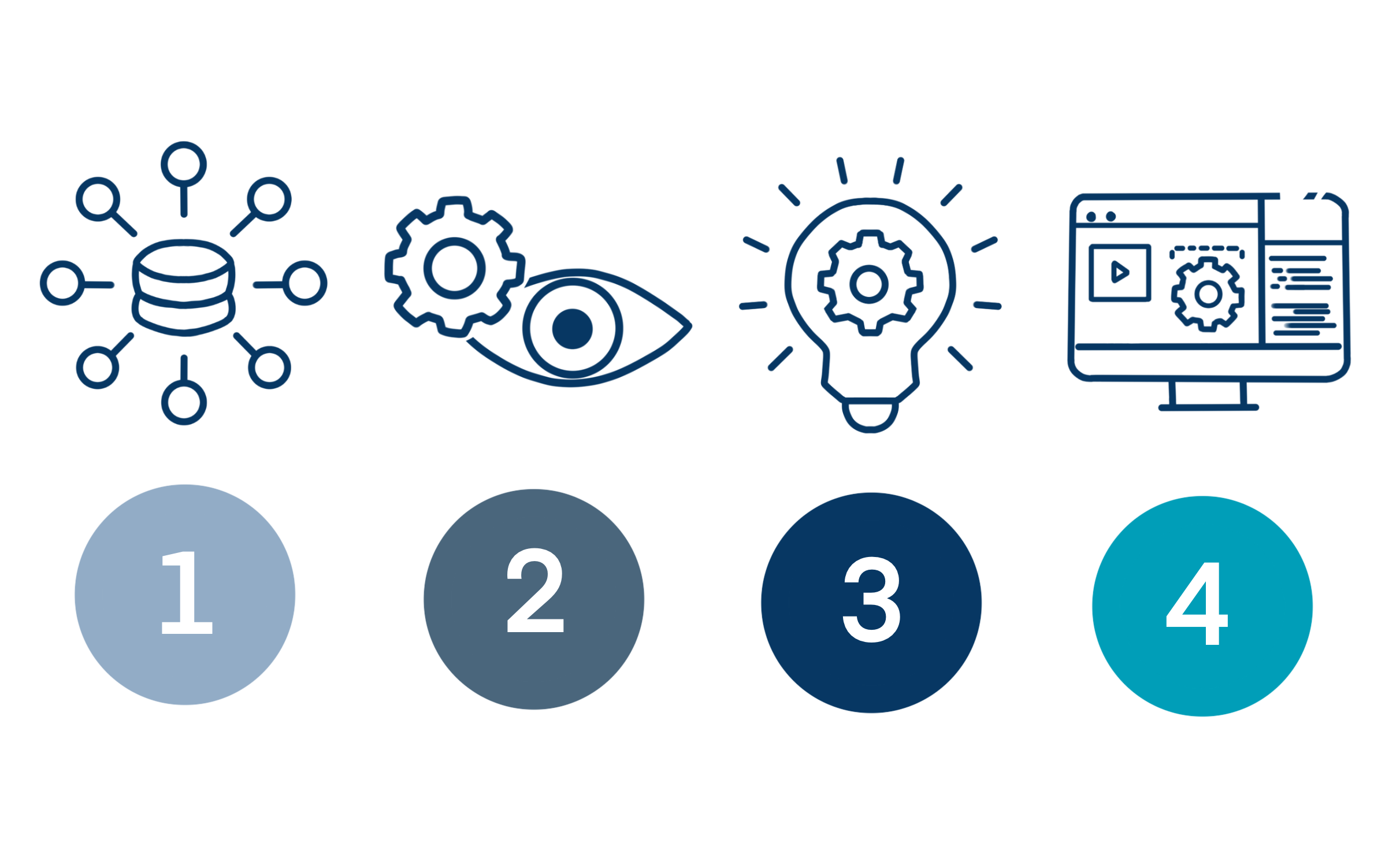
DATA - step 1: capture the right information

The first step is to capture data on who does what, when, how, why, and at what cost. This requires moving from error-prone paper records to complete and accurate paperless records in a single source of truth. 

The result:

  • Eliminate errors and missing information
  • Reduce cost of errors
  • Improve efficiency across every work center 

Once historical data sources are identified the next step is to have current data available. Most of the future value is in current, accurate information. This requires collecting data in real-time, using a digital solution. The cost of such a solution can be minimized by using an off-the-shelf fixed-price solution that supports simple PCs and handheld tablets across your work centers.  Consolidating the collection of real-time data enables a continuous flow of accurate, complete information about your production activities.

INFORMATION - step 2: turn data into visibility 

Constantly collecting data in real-time transforms disconnected data into meaningful information about your production process and the orders flowing through it. This step requires designing digital work instructions that help manage production data errors, defects, delays, and other scrap and waste producers. It doesn’t have to be an expensive step, a set of your unique production requirements, modern design tools are available to make this process efficient and scalable.

The benefit is immediate: faster, more accurate decision-making and a base of visibility and control across your operations. 

The next step is to use this information as a knowledge base of all production operations all the time. This becomes your control center to manage work efficiently, quickly, with few errors or problems. The move from a paper-driven environment to a high productivity controlled environment will add benefits and growth for many years.

An ongoing cost here will be the design and creation of work instructions and data sheets for the remaining missing and highly valuable information you could collect. With the completion of a successful partial analysis, a more complete analysis can be structured to include collection of current data across inventory management, scheduling, process visibility and control, and other process data.

KNOWLEDGE - step 3: control production with confidence 

This step provides the ability to manage your information in the context of ongoing processes. Integrating work instructions, inventory management, scheduling, and process controls enables you to: 

  • Keep every job on track and on time
  • Improve quality control and reduce defects
  • Run a proactive, rather than reactive, production floor

This part of the production process can incrementally be added over time, saving additional resources and costs. This is also where rule sets are added to manage production through any interruption. Overall, this is a major factor in your future decision processes and leads to doing things faster and more efficiently with higher quality at lower cost.

Once implemented, time can be invested to design a fix for all quality defects, process defects, and other production interruptions. These “what ifs” will become a library of quick remedies for surprise issues. This effort will move operations from a crisis mode to a pro-active mode that avoids unnecessary delays, interruptions, missing inventory, or missing data.

AUTOMATE - step 4: drive continuous improvement 

The final step is to automate rule sets so production becomes predictable and resilient. Over time, automation creates a library of predictable operations, fixes, and alternatives to control and reduce costs. 

  • Examples of available automation to improve overall efficiency include:
  • Automatic BOM and inventory verification
  • Job data verification and alerts
  • Real-time schedule tracking with missed-job alerts
  • Quality checks and quality data alerts
  • Automation recording of all work, timing, events, and alarms
  • Automatic job queuing 

Each automation reduces errors, lowers cost, and frees resources for higher-value work by adding to the accuracy and completeness of production information 

The result: predictable growth for small and midsize manufacturers 

By following this four-step process - Data, Information, Knowledge, Automation - you now have an inexpensive, tailored, solution trained with your unique processes, products and staff capabilities. Small and midsize manufacturers gain:

  • Real-time visibility into production
  • Lower costs through fewer errors and rework
  • Faster, more confident decision making
  • A connected workforce that contributes to advancing your company 

With the right digital solution, you can achieve a fast-paced, cost-controlled production environment where surprises are minimized, workers are empowered, and growth is sustainable.

From,

Untitled_Artwork (39)

Tony Cuilwik

CIMx Software, Founder 


Welcome to the From the Desk of the CEO series from CIMx Software. Each entry offers an inside look at the challenges, opportunities, and ideas shaping the future of manufacturing directly from our founder's perspective. Interested in more? We're glad to have you join the conversation,  subscribe for updates and look forward to insights that inspire new ways to think about your shop floor.

subscribe here for more